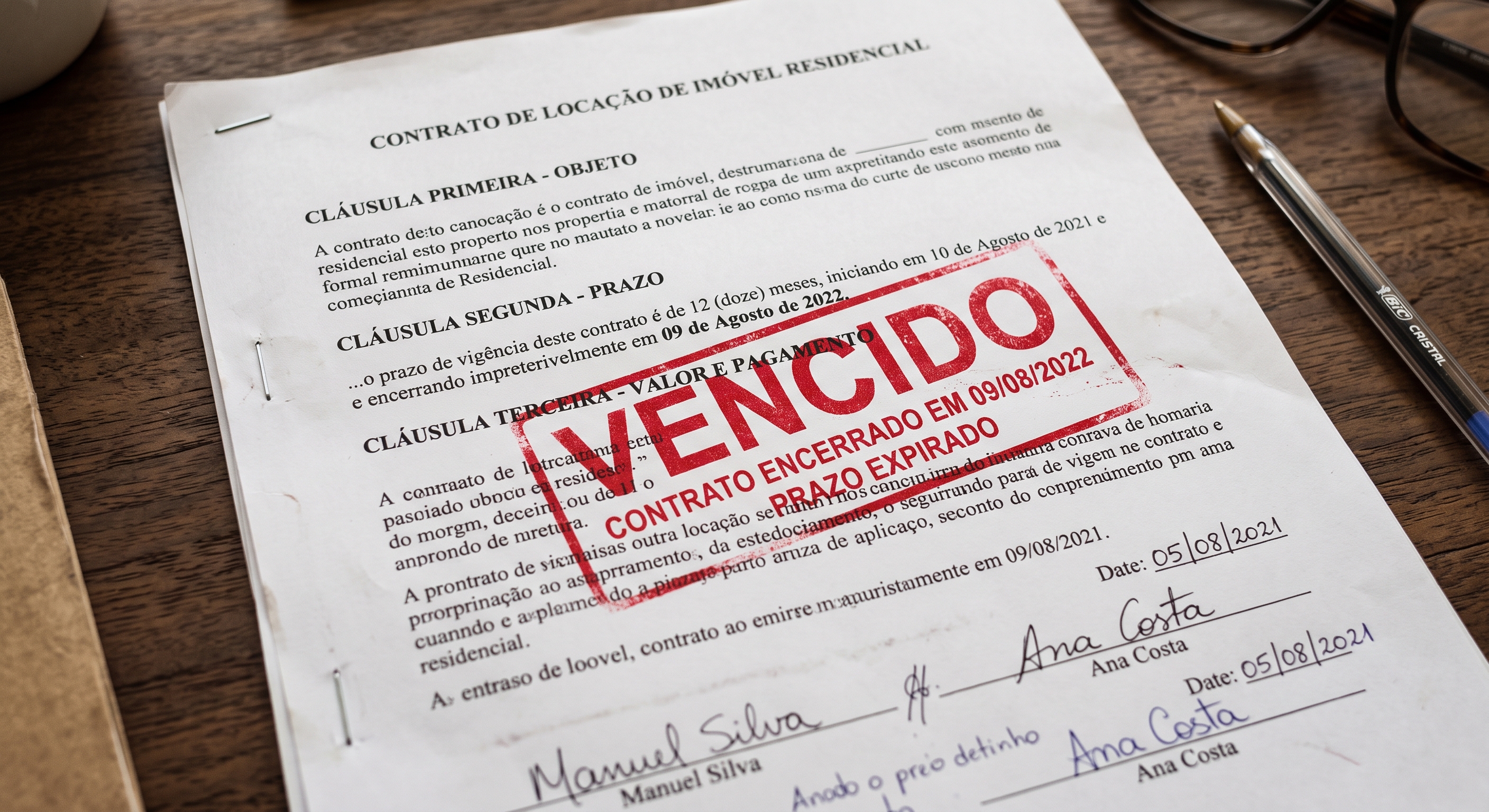
Every collective bargaining agreement gets signed with the same ceremony and forgotten with the same speed. Someone prints it, files it, sends a summary to Legal or HR, and life goes on. The problem isn't the signing. It's that no one marks, that same day, the date the document stops being valid — and the habit becomes applying what was agreed back then until someone complains or an inspection catches it.
The date everyone ignores after signing
A collective bargaining agreement has a fixed term, usually one year, renewed on a base date that changes from category to category. That should make tracking it simpler — it's just a countdown, not a surprise. In practice, it works the other way: the fixed deadline becomes routine, routine becomes automatic, and that automatic habit is exactly what makes someone keep citing a clause a year after it expired. The document doesn't disappear from the file. It just quietly stops applying, while still being cited as if nothing had changed.
The cost of ignoring it went up. The habit didn't.
That habit got more expensive recently. In April this year, Brazil's Supreme Court (STF) reinforced that no court can extend the effects of a collective bargaining clause after it expires — the legal thesis itself had existed since 2016, but the ruling closed the gray area that many HR and Legal teams had been treating loosely, keeping a benefit or condition from an expired agreement alive through sheer inertia. The point here isn't the legal merit of the ruling. It's that the cost of not rereading, once an abstract risk, now has a name. And the reason it kept happening was never that whoever answers the question lacks competence — it was the absence of a trigger to flag when the deadline turns.
Eight documents, one habit of treating them as if they were one
Take an operation with a presence in more than one state and a mixed workforce across sales, administrative, and operational roles. That typically means four to eight collective bargaining agreements in force at the same time — one per union, per category, per base date — not one agreement, a mosaic of them, each piece expiring in a different month of the calendar. When HR or Legal answer a question about an allowance, benefit, or salary floor by citing "the agreement" in the singular, the question almost no one asks first is: which of the eight, and is it still valid? In a team that handles dozens of repeat questions a month, even an occasional mistake with an expired clause — applied to payroll or a termination — creates rework that rarely comes in under 15 to 20 hours of senior staff time between research, correction, and a formal response to the employee, not counting the risk that the same mistake repeats across everyone in that category before anyone notices.
Rereading shouldn't be senior staff's job
A company that doesn't know, today, which of its agreements are still valid doesn't have a legal problem. It has a routine problem: no one marked the date to reread it, and no one built a way to know this without relying on the memory of whoever signed the document a year ago. At AskLisa, Lisa doesn't answer by citing "the agreement" in the generic sense — she checks the priority source for that specific category first and knows exactly how long it holds. Rereading every document, every time someone asks, shouldn't be senior staff's job. It should be the machine's routine.